
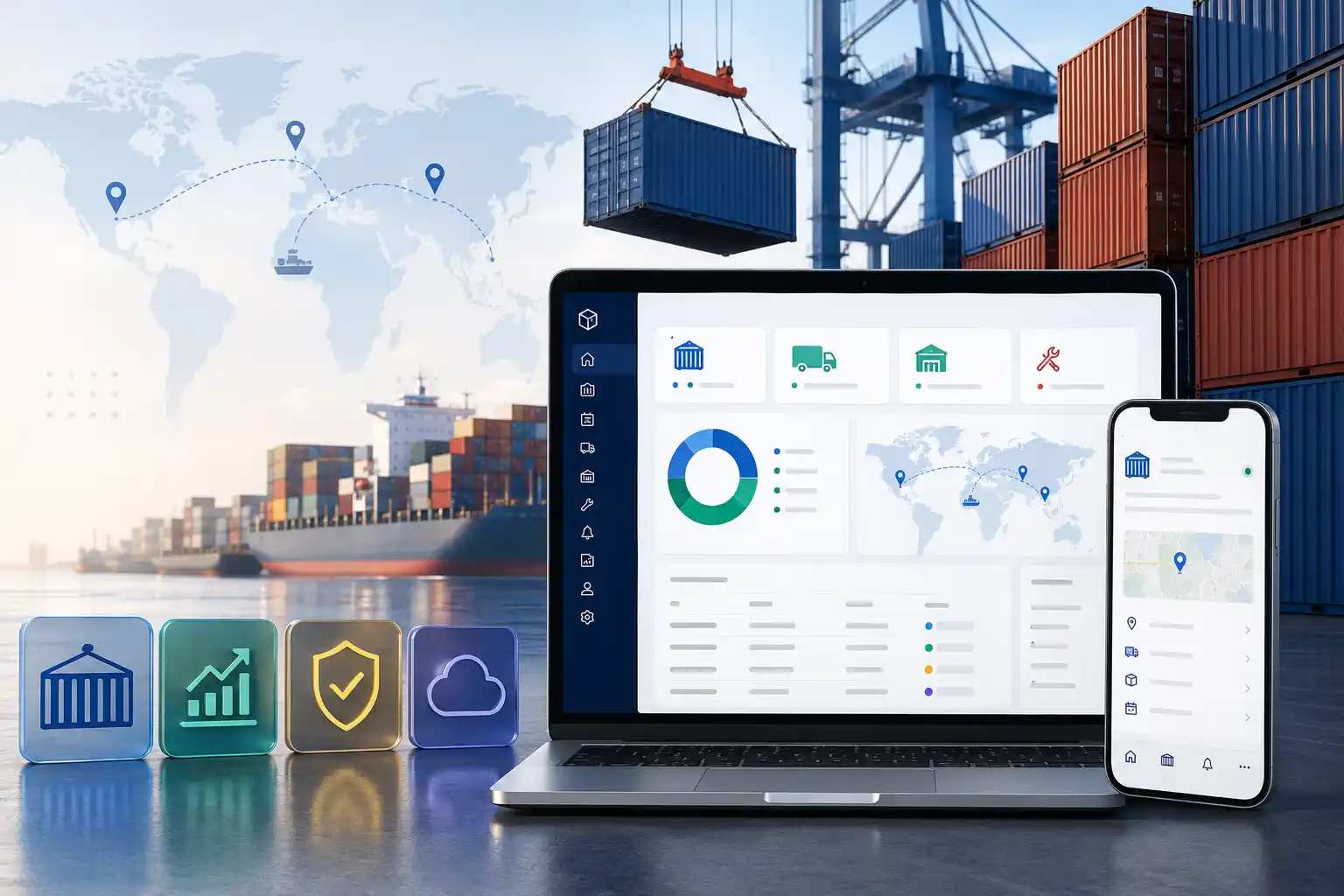
Managing ocean freight has never been more complex. As we navigate the global supply chain landscape in 2026, relying on fragmented spreadsheets, disjointed email chains, and legacy systems is no longer a viable strategy for large-volume shippers. When you are moving thousands of TEUs across international waters, a lack of real-time visibility and automated workflows directly translates to skyrocketing detention and demurrage costs, delayed shipments, and frustrated partners.
Shipping container management software is software that helps shippers manage the full container lifecycle, including carrier schedules, bookings, shipping instructions, VGM declarations, container tracking, milestone updates, exception alerts, documents, and reporting. However, with dozens of platforms on the market, the challenge lies in finding a solution that actually addresses the unique nuances of your maritime supply chain without introducing unnecessary bloat.
This comprehensive guide will help you navigate the top platforms, understand the critical tradeoffs and risks of software implementation, and choose the best software for container operations to streamline processes and increase productivity.
At a Glance: Best Shipping Container Management Software 2026
BuyCo is best suited for large-volume shippers, importers, and exporters that need end-to-end ocean freight execution, including booking, tracking, document management, allocation management, and exception handling. CargoWise is stronger for freight forwarders and 3PLs that need a broad ERP, while Descartes is often stronger for compliance-heavy workflows.
When evaluating container management software, it is crucial to explicitly call out the tradeoffs and risks associated with choosing the wrong platform. Many organizations fall into the trap of purchasing software with the longest feature list, only to realize those features do not align with their actual daily workflows.
The Hidden Risks and Tradeoffs in Software Selection
When evaluating container management software, it is crucial to explicitly call out the tradeoffs and risks associated with choosing the wrong platform. Many organizations fall into the trap of purchasing software with the longest feature list, only to realize those features do not align with their actual daily workflows.
The Risk of Generic TMSs
Adopting a generalized TMS when you specifically need container management can lead to severe operational bottlenecks.
- Tradeoff: You gain a broad suite of generic tools, but sacrifice the deep, specialized API connections needed for real-time shipping container tracking and direct carrier bookings.
- Risk: High implementation costs and timelines stretching beyond 12 months, leading to low user adoption and a failure to realize a return on investment (ROI).
The Danger of Fragmented Systems
Attempting to piece together a booking tool, a separate visibility platform, and a standalone document management system creates data silos.
- Tradeoff: Cheaper upfront individual licensing costs versus the long-term expense of manual data re-entry.
- Risk: Blind spots in your maritime supply chain. If your booking data does not automatically sync with your tracking data, you risk missing critical exceptions,leading to hefty demurrage and detention fines.
« Organizations that fail to centralize their container operations often spend up to 40% of their day just searching for the true status of their shipments. The right platform eliminates this friction entirely by offering a single source of truth. »
Carl Lauron
What Makes Great Container Management Software
To mitigate these risks, great container management software must deliver on several fundamental capabilities:
- End-to-End Workflow Coverage: The platform must handle the complete lifecycle in one place—from planning and booking to tracking and document management.
- Zero Re-Entry Required: Information entered during the booking phase must flow seamlessly into shipping instructions and tracking modules.
- Purpose-Built for Ocean Freight: The system must natively understand maritime complexities, such as Verified Gross Mass (VGM) declarations, port cut-offs, and carrier allocations.
- Actionable Visibility: Tracking is useless without context. The best platforms provide real-time alerts on exceptions so your team can proactively manage delays.
Top Container Management Software for 2026
How we evaluated platforms: We compared each platform based on ocean freight workflow coverage, carrier connectivity, booking capabilities, tracking visibility, document management, compliance features, implementation complexity, and suitability for large-volume shippers versus freight forwarders.
BuyCo
Best For: Large-volume shippers, importers, and exporters needing end-to-end maritime supply chain control.
Implementation: Agile and phased, typically operational in weeks.
BuyCo is an AI-powered ocean freight software platform designed specifically for large-volume shippers to manage their entire container shipping lifecycle in one place. By connecting shippers directly to a vast network of carriers, forwarders, and partners, the BuyCo Platform delivers unparalleled visibility and control.
Key Strengths:
- Large Scale: BuyCo serves importers and exporters across 120+ countries, successfully tracking over 60 million events and 1 million containers annually.
- Automation: The platform allows you to centralize and automate operational processes, including booking, scheduling, and document management.
- AI-Powered Insights: Advanced algorithms help optimize carrier selection based on historical performance, allocations, and cost.
- Direct Carrier Connectivity: Deep API connections with major ocean carriers ensure your data is always accurate and in real-time.
The BuyCo Advantage:
Organizations leveraging the BuyCo Platform frequently report high reductions in administrative tasks—often saving hundreds of hours per month—allowing logistics teams to focus on strategic exceptions rather than manual data entry.
CargoWise
Best For: Global 3PLs and enterprise-scale freight forwarders.
Implementation: Can be up to 6 to 12+ months.
CargoWise is a comprehensive freight forwarding operating system used by many of the world’s largest logistics service providers. It offers vast functionality across all modes of transport and financial accounting.
Key Strengths:
- Extensive feature depth for complex, multi-modal forwarding operations.
- Strong accounting and global customs compliance modules.
Considerations and Tradeoffs:
When evaluating BuyCo vs CargoWise, it comes down to your core business model. CargoWise is traditionally a leading software for freight forwarders who need to manage complex global agency networks, warehousing, and internal financials. However, for large-volume shippers (importers/exporters) whose primary goal is optimizing their own ocean freight, BuyCo is the better choice.
Descartes
Best For: Operations heavily focused on complex customs compliance and denied party screening.
Implementation: 12+ weeks.
Descartes is highly regarded for its trade intelligence and regulatory compliance capabilities, making it a staple for organizations that must navigate complex international trade laws.
Key Strengths:
- Industry-leading denied party screening.
- Deep global trade intelligence capabilities.
Considerations and Tradeoffs:
Descartes is especially strong in trade compliance and denied party screening. Shippers whose main priority is container booking, shipment execution, and collaborative ocean freight workflows should compare the specific Descartes modules they need against more execution-focused platforms.
Key Features to Evaluate
When selecting your platform, ensure it excels in these specialized areas:
Container Booking Software Capabilities
- Allocation Management: Automatically track your carrier allocations and commitments to avoid shortfalls or penalties.
- Automated Scheduling: View all available sailing schedules across carriers in one consolidated dashboard.
- Direct E-Booking: Send booking requests directly to carriers via EDI or API connections without logging into individual carrier portals.
Shipping Container Tracking
- Real-Time Milestone Visibility: Track key events (Gate In, Loaded, Discharged, Gate Out) seamlessly.
- Exception Management: Receive automated alerts for rollovers, delays, or early arrivals so you can adjust downstream supply chain operations.
- Detention & Demurrage (D&D) Monitoring: Track free time accurately to avoid unnecessary port storage fees.
Document and Compliance Management
- Centralized Repository: Store Bill of Lading (B/L), Commercial Invoices, and Packing Lists in a collaborative, cloud-based hub accessible to partners.
- VGM Automation: Since the Verified Gross Mass (VGM) regulations were made mandatory by the International Maritime Organization in 2016, compliance is non-negotiable. Top software allows you to calculate, fill out, and submit your VGM electronically directly to the carrier.
Implementation and Pricing Realities
Understanding the true cost of ownership and implementation timelines is critical to mitigating risk.
Enterprise TMSs
- Implementation: Often requires 6 to 12 months, demanding dedicated internal IT teams.
- Costs: Can range from hundreds of thousands to over a million dollars annually, factoring in user licenses, transaction fees, and extensive training modules.
- Risk: Prolonged disruption to daily operations and a high risk of feature bloat.
Purpose-Built Container Management (e.g., BuyCo Platform)
- Implementation: Agile deployments that get your core team booking and tracking in a matter of weeks.
- Costs: Transparent SaaS pricing models based on container volume and required modules, ensuring you only pay for the value you receive.
- Benefit: Rapid user adoption and immediate operational ROI through reduced manual labor and mitigated D&D fees.
Shipping Container Management FAQ
Conclusion
The right software fundamentally transforms how you handle ocean freight. By moving away from fragmented spreadsheets and generic legacy systems, you can eliminate operational blind spots, reduce costly errors, and empower your logistics team to operate at their highest potential. You need a platform that offers real-time visibility, automates the tedious booking processes, and centralizes all document management into one reliable hub.